

Coasta Rica | Sky Project Double Phase Low Temperature Hone
Costa Rica
Sky Project 2100 Las Margaritas #2
Region:Tarazzu
Variety:Catuai
Altitude:2,000-2,100m
Process:Double Phase Low Temperature Honey
Aroma Notes:
Chamomile, Pineapple, Citrus, Nectar, Cashew
$750.00
Pickup currently unavailable
Dual-Stage Low-Temperature Honey Processing: A New Frontier in Flavor Innovation
The emergence of the “Sky Project” marks a shift in Tarrazú from tradition toward innovation. Initiatives like this are typically led by mills or partner estates, focusing on rigorous lot management and experimental processing techniques to develop highly distinctive flavor profiles. At its core, this approach replaces intuition with scientific precision, allowing for greater consistency and control over flavor outcomes.
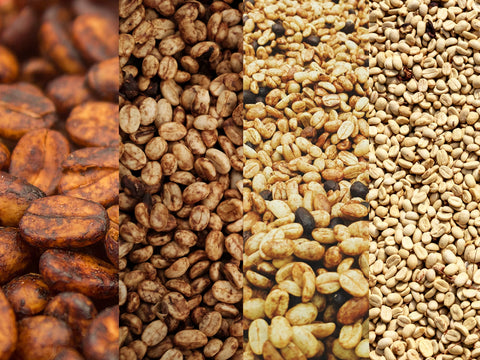
One of its most notable innovations is the “dual-stage low-temperature honey process,” an advanced evolution of the traditional honey process. In a conventional honey process, coffee cherries are depulped while retaining part of the mucilage, then dried to achieve a balance between the cleanliness of washed coffees and the sweetness of natural processes.
The dual-stage low-temperature method refines this approach through a more segmented and controlled workflow. In the first stage, after depulping, the coffee undergoes controlled fermentation in a low-temperature environment. Lower temperatures slow down microbial activity, extending fermentation time and allowing sugars to break down more gradually and evenly, while minimizing the risk of off-flavors caused by over-fermentation.
In the second stage, low temperatures and stable humidity are maintained throughout the drying phase. This allows the sugars within the mucilage to gradually infuse into the beans, enhancing sweetness and body.
The defining characteristic of this process lies in its ability to balance clarity with intensity. Compared to traditional honey processing, which can sometimes result in unstable fermentation, low-temperature control ensures a cleaner flavor profile, while the dual-stage design further enhances depth and sweetness.
