

High-Altitude Specialty Coffee from El Salvador

Las Camelias Estate
Located in the highlands of La Palma, Chalatenango, El Salvador, Las Camelias Estate is a coffee farm dedicated to specialty coffee and the exploration of unique varieties.
Unlike farms that focus primarily on traditional local varieties, Las Camelias actively experiments with different coffee varieties to explore the possibilities created by the interaction between varietal characteristics and El Salvador’s high-altitude terroir. In addition to the renowned Salvadoran Pacamara, the estate also grows less commonly cultivated varieties in the region, including Geisha and SL28.
Among these, SL28 is particularly noteworthy. Originally a variety closely associated with Kenyan coffee, SL28 was introduced to the highlands of El Salvador, where it has developed a flavor profile distinct from that typically found in Kenya.
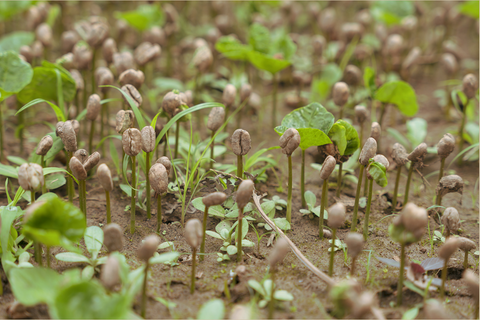
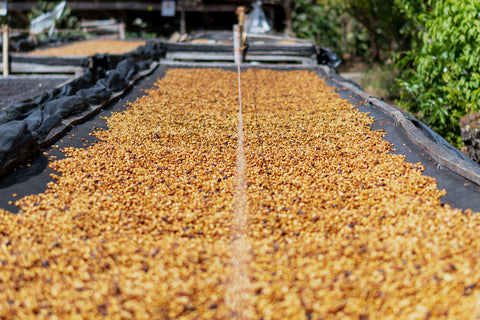
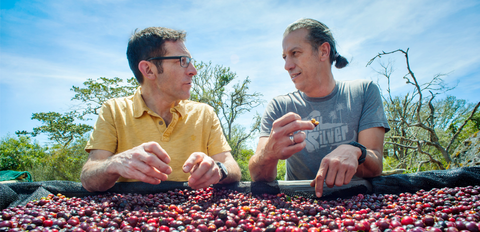
This lot was grown at an altitude of approximately 1,850–1,980 meters and processed using the Natural process. The combination of high-altitude cultivation and natural processing helps highlight the sweetness and fruit character of the ripe coffee cherries.
In the cup, notes of red florals, cherry, and tropical fruit can be found, creating an elegant interplay between delicate floral aromas and bright fruit-forward flavors.
SL28|A Classic Kenyan Variety
SL28 is one of the most iconic coffee varieties in the specialty coffee world.
It was selected by Scott Agricultural Laboratories in Kenya during the 1930s. In 1935, SL28 was selected from an individual tree within the Tanganyika Drought Resistant population. World Coffee Research classifies SL28 as having a Bourbon-related genetic background, and notes its strong drought tolerance and excellent potential for high-quality coffee production at high elevations.
The abbreviation “SL” refers to Scott Laboratories, while “28” refers to its selection number in the breeding program.
What makes SL28 particularly fascinating is its ability to develop a distinctive and complex flavor profile under suitable growing conditions. Classic Kenyan SL28 is often associated with notes of blackcurrant, berries, grapefruit-like acidity, tomato-like acidity, and a wine-like structure.

However, the character of SL28 is not limited to Kenya.
As the specialty coffee industry continues to explore the potential of distinctive varieties, SL28 has gradually been introduced to other coffee-producing regions, including Latin America.
The appeal of SL28 from El Salvador lies in discovering how the same variety expresses itself when grown outside Kenya—particularly under the high-altitude environment, soil, and climate of El Salvador.
Rather than simply reproducing the classic Kenyan SL28 profile, the variety can take on new characteristics shaped by its new terroir. This Salvadoran SL28 therefore offers an opportunity to experience how variety and terroir interact to create a different expression of the same genetic lineage.

HIU Project|Exploring Coffee Quality Through Small Lots
The HIU Project is another important aspect of this coffee.
At its core, HIU focuses on exploring the details of variety, origin, cherry maturity, and processing methods to identify coffees with distinctive quality potential and present them as carefully developed small lots.
Graciano Cruz is an important figure in the story of both the HIU Project and Las Camelias Estate. He has long been involved in the exploration of unique coffee varieties and specialty coffee production, and has played a role in introducing varieties such as SL28 to growing environments in El Salvador.
The HIU Project can therefore be understood as a specialty coffee exploration initiative centered on discovering new possibilities at the farm level.
The same origin can produce dramatically different cup profiles depending on the variety, while the same variety can express itself in entirely different ways depending on its terroir and processing method.
And this is what makes this coffee particularly fascinating:
It is not simply an SL28 from El Salvador. It represents an exploration of how SL28 expresses itself after leaving its traditional home in Kenya and entering the high-altitude environment of Central America.